

The East Kinston Neighborhood Hub is a community-anchored campus and organizing initiative in the heart of East Kinston — rooted in people, powered by youth leadership, and focused on building long-term resilience.
Led by Kinston Teens, the East Kinston Neighborhood Hub brings together space, programming, and organizing to meet immediate needs while building toward a stronger, more just future for East Kinston.
East Kinston is one of Kinston’s most historically significant neighborhoods — rich in culture, relationships, and resilience — and also one of the most impacted by disinvestment, flooding, and inequitable development.
The Neighborhood Hub grew out of years of door-to-door outreach, listening sessions, youth organizing, and neighborhood meetings. It exists because residents and young people said they needed: a consistent place to gather; access to food, technology, and information; a real seat at the table in decisions about development; and investment without displacement
-
The East Kinston Neighborhood Hub supports programming that addresses both immediate needs and long-term opportunity, including:
Food access and community food distributions
Youth leadership development and civic engagement
Digital access, training, and technology-based programs
Neighborhood meetings, planning sessions, and listening spaces
Mutual aid and emergency response coordination
Community events, block parties, and outdoor activities
All of this work is led or supported by Kinston Teens, in partnership with residents, youth leaders, and partner organizations.
-
The Hub campus includes several spaces:
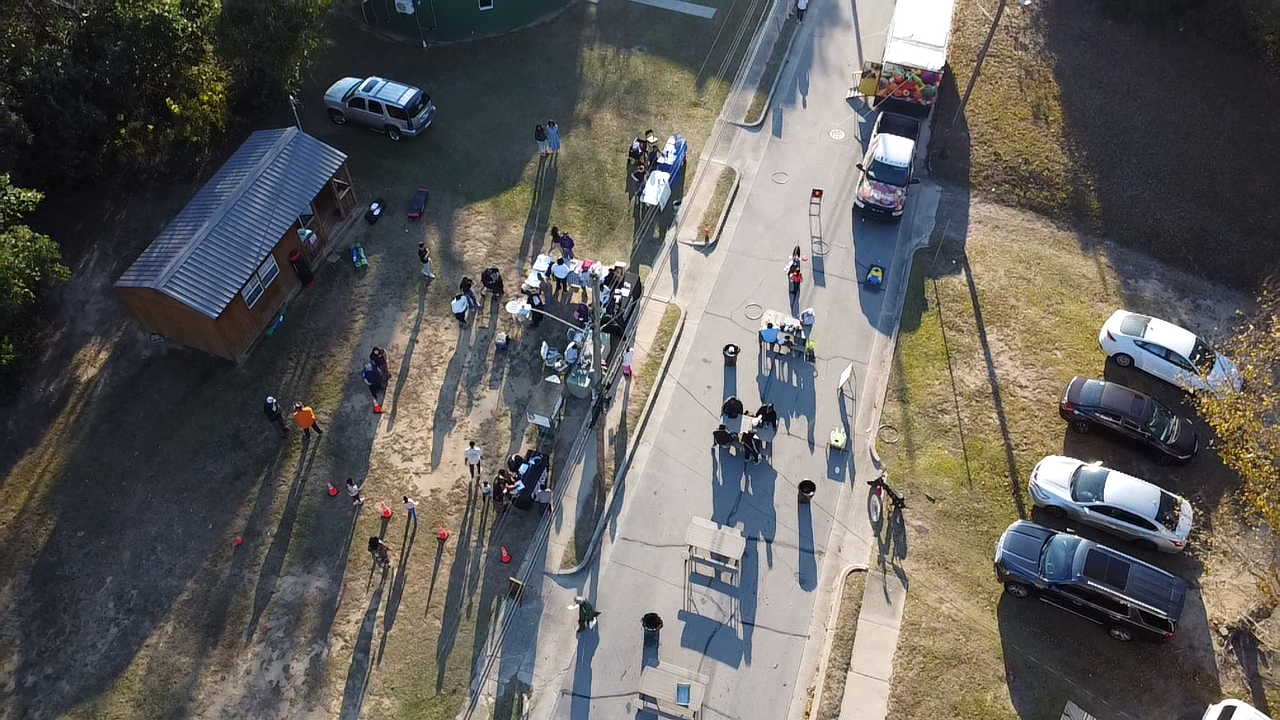
A formerly abandoned home transformed into a neighborhood outreach center, used for food access, mutual aid coordination, small meetings, and day-to-day community support.
The Circle Building, a former church building across the street, now activated as a multipurpose community space for neighborhood meetings, youth programming, digital access, trainings, and gatherings.
The Hub Grounds, the vacant land surrounding the buildings that has been reactivated for food distributions, outdoor games, youth activities, community events, and seasonal programming.
-
While the Hub is operational today, we are also working toward a larger, permanent Neighborhood Hub facility that will serve as a true resilience hub for East Kinston.
That future phase includes plans for:
Expanded community meeting and program space
Co-working spaces and workforce training facilities
Food, health, and emergency resilience infrastructure
Climate-resilient design and community-owned assets
This next chapter builds on what already exists — it does not replace it. We believe that resilience is built through relationships first, and infrastructure second.

Our Organization
The East Kinston Neighborhood Hub is an initiative of Kinston Teens, a youth-led nonprofit organization working at the intersection of civic engagement, youth leadership, digital access, and community development. The Hub reflects our belief that:
Young people should help design the future of their neighborhoods
Communities deserve ownership over the spaces and systems that serve them
Real change happens through long-term presence and trust
Our Beginnings
The Neighborhood Hub started as a small home that Kinston Teens acquired in 2018, and has worked to renovate into a transformative space for community-building and youth development. We are working to build a new and larger Neighborhood Hub in East Kinston that will serve as a community resilience center during times of crisis and all year long.

The Neighborhood
East Kinston, an area just east of downtown and the focus of this project, has had more difficulty recovering in comparison to other areas of our city. East Kinston was hit hardest by recent hurricanes and struggles to regain its footing as we grapple with issues related to concentrated poverty and crime. This area, one of the main gateways into the city and downtown, could be characterized as dilapidated residences, abandoned structures, outdated and dense public housing, and poorly-maintained vacant lots. The neighborhood is also dramatically underserved by commercial enterprises, resulting in scarce employment opportunities and limited access to goods and services for local residents. We see our neighborhood as a place of hope and potential.